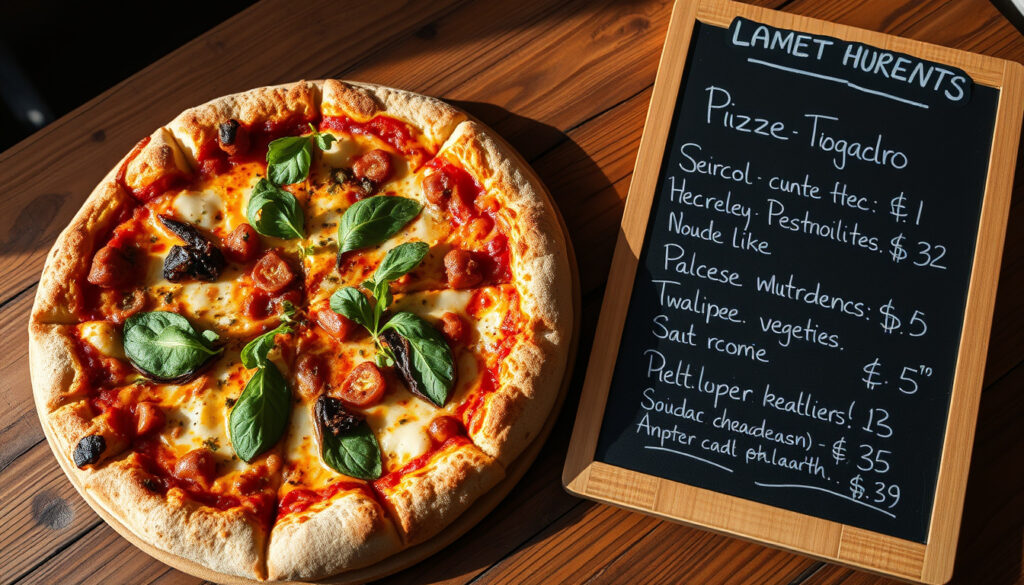
Gusta Sourdough Pizza Menu: Prices and Health Tips
Anyone who has wandered through Serangoon looking for a pizza that doesn’t leave them feeling sluggish has probably stumbled upon Gusta Sourdough Pizza Co. This Singapore pizzeria built its menu around a Neo-Neapolitan sourdough crust — naturally fermented and noticeably lighter than the standard chain slice.
Pizza price range: S$20.50 – S$27.50 ·
Number of pizza options: 10+ ·
Crust type: Sourdough Neo-Neapolitan ·
Calories per slice (approx.): 250–350 ·
Location: Serangoon, Singapore
Quick snapshot
- Gusta uses sourdough Neo-Neapolitan crust for all pizzas (GUSTA SOURDOUGH PIZZA CO (official site))
- Menu includes Margherita, Calabrese, Hawaiian, and specialty pizzas (GUSTA SOURDOUGH PIZZA CO)
- Pizzeria is located in Serangoon, Singapore (GUSTA SOURDOUGH PIZZA CO)
- Whether Gusta is halal-certified — not confirmed by official sources
- Exact calorie count per pizza — not published on the menu
- Whether gluten-free crust is available — no indication on the current menu
- Gusta has built a following around sourdough crust in a market dominated by commercial pizza chains (GirlStyle Singapore (lifestyle media))
- Three-feet-long pizza format signals demand for sharing-friendly options (GirlStyle Singapore)
- Growing interest in sourdough health benefits could drive more menu transparency around nutrition (Healthline (nutrition resource))
- Demand for halal and gluten-free options may influence future menu expansion (Healthline (nutrition resource))
Here is how the menu breaks down, what the sourdough crust actually means for your meal, and where the trade-offs live.
| Attribute | Detail |
|---|---|
| Location | Serangoon, near NEX mall, Singapore |
| Crust | Sourdough Neo-Neapolitan |
| Price range | S$20.50 – S$27.50 for most pizzas |
| Halal | Not confirmed; some sources indicate not halal-certified |
| Delivery | Available via order.gustapizza.co |
What makes Gusta pizza unique?
What crust does Gusta use?
Gusta’s defining feature is its sourdough Neo-Neapolitan crust. The restaurant uses a sourdough starter rather than commercial yeast, which gives the base a tangy, complex flavour and a texture that is crisp on the outside and airy inside. According to the brand’s GUSTA SOURDOUGH PIZZA CO (official site), every pizza on the menu is built on this crust — no plain dough alternatives.
The Neo-Neapolitan style means the pizza is fired at a high temperature but the crust is slightly thicker and more resilient than a traditional Neapolitan, making it easier to eat by hand without the centre collapsing. The implication: this is a deliberate choice for a market that wants both authenticity and practicality.
The sourdough crust adds about 24–48 hours of fermentation time compared to standard pizza dough. That means better digestibility for many people, but it also means Gusta cannot produce dough on demand — every batch is planned ahead.
What toppings are available?
The menu is split into classic, premium, and vegan categories. Classics include the Margherita (tomato sauce, mozzarella, fresh basil — S$20.50), the Calabrese Salami (tomato sauce, mozzarella, Calabrese salami, parsley — S$22.50), and the Hawaiian (tomato sauce, mozzarella, cooked ham, pineapple, extra virgin olive oil — S$23.50), all confirmed by GUSTA SOURDOUGH PIZZA CO (official site).
Premium options push the price higher and the flavour profile further. The Mala Chicken (S$24.50) brings a Singapore-localised spice hit, while the Mushroom & Truffle Oil (S$27.50) layers homemade porcini salsa, white Swiss button mushrooms, kale, and truffle oil, as noted by The Cravers’ Guide (food review site). The Five Cheese pizza (mozzarella, asiago, provolone, grana padano, pecorino — S$25.50) is the option for anyone who wants proof that sourdough can handle heavy dairy.
Vegan pizzas are available with dairy-free cheese, though the specific toppings are not detailed on the main menu. The restaurant also offers a three-feet-long pizza format at S$36, customisable with up to four flavours, reported by GirlStyle Singapore (lifestyle media).
What kind of crust does Gusta Pizza use?
Why sourdough crust?
Sourdough fermentation relies on a live culture of lactic acid bacteria and wild yeasts rather than commercial yeast. This process breaks down some of the gluten and phytic acid in the flour, which can make the pizza easier to digest and its nutrients more bioavailable. Research from Harvard T.H. Chan School of Public Health (academic nutrition research) notes that sourdough bread has a lower glycemic index than bread made with conventional yeast because the fermentation changes the starch structure.
Gusta’s approach is to use that same starter-based fermentation for its Neo-Neapolitan crust, giving the dough a distinctive tang and a longer shelf life without preservatives. The brand’s GUSTA SOURDOUGH PIZZA CO (official site) describes the crust as the foundation of the menu, not an optional upgrade.
The catch: while the health benefits are real, the toppings can quickly offset them.
Is the crust gluten-free?
No. The sourdough crust is made from wheat flour, and while the fermentation process breaks down some gluten, it does not eliminate it. People with coeliac disease or severe gluten sensitivity should not assume sourdough is safe. According to Healthline (nutrition resource), even long-fermented sourdough can contain gluten levels above the 20 ppm threshold considered safe for coeliac diets.
The catch: Gusta currently does not offer a gluten-free crust alternative. Anyone avoiding gluten completely will need to look elsewhere or stick to sides.
The bottom line: Gusta’s sourdough crust is the menu’s central selling point, but its gluten content and lack of alternative crusts mean it is not for everyone.
Is sourdough pizza healthier than regular pizza?
Calorie comparison
On a straight calorie count, sourdough pizza is not dramatically different from regular pizza. A typical slice of sourdough pizza (one-eighth of a 12-inch pie) contains roughly 250–350 calories, depending on toppings. A comparable slice from a standard pizza chain falls in the same range, according to nutritional data compiled by Healthline (nutrition resource).
What matters more is the carbohydrate composition. Sourdough’s lower glycemic index means blood sugar rises more slowly after eating, which can reduce the insulin spike and the subsequent energy crash. A 2017 study published in PubMed (peer-reviewed nutrition research) found that sourdough bread produced a significantly lower glycemic response than bread made with conventional yeast, even when the flour type and hydration were identical.
Nutritional benefits of sourdough
The fermentation process reduces phytic acid, a compound in grains that binds to minerals like iron, zinc, and magnesium and blocks their absorption. A review in PubMed (peer-reviewed food science research) confirms that sourdough fermentation can increase the availability of these minerals by 30–50% compared to non-fermented dough. The lactic acid bacteria also produce organic acids that act as natural preservatives, which is why sourdough bread stays fresh longer without additives.
The catch: these benefits apply to the crust. The toppings — cheese, cured meats, truffle oil — can add significant saturated fat and sodium. A serving of the Five Cheese pizza, for example, uses five different cheeses, which pushes the fat content well above what a standard Margherita would deliver.
Easier digestion?
Many people report feeling less bloated after eating sourdough compared to regular bread. The fermentation process breaks down some of the gluten proteins and FODMAPs (fermentable carbohydrates that can cause digestive discomfort). A study published in PubMed (gastroenterology research) found that sourdough fermentation reduced FODMAP levels in wheat bread by up to 75%, making it better tolerated by people with mild digestive sensitivity.
It is not a cure-all. People with coeliac disease cannot rely on sourdough alone. But for the average diner who feels heavy after a standard pizza, the switch to sourdough can make a real difference.
The health advantage of sourdough pizza is real but conditional. If you load it with four cheeses and cured meats, the crust’s benefits are offset by the toppings. The smartest move: choose a lean topping like Margherita or a vegetable-forward option and let the crust do the work.
How much does a 7 inch pizza cost?
What is the price range at Gusta?
Gusta’s menu prices are listed without explicit size labels for every item, but the standard pizzas range from S$20.50 for the Margherita to S$27.50 for the Mushroom & Truffle Oil, as confirmed by GUSTA SOURDOUGH PIZZA CO (official site). The classic options (Margherita, Calabrese, Hawaiian, Italian Anchovies, Ham & Mushroom, Italian Sausage) sit between S$20.50 and S$24.50. The premium and specialty pizzas (Five Cheese, Mala Chicken, Potato & Cheese, Raclette Cheese & Potato, Mushroom & Truffle Oil) run from S$25.50 to S$27.50, according to Confirm Good (food review site).
Are there larger sizes?
Yes. Gusta offers a three-feet-long pizza format priced at S$36, which can be customised with up to four different flavours across the length. The available flavour choices reported in reviews include Bufala, Pepperoni, Italian Sausage, Hawaiian, and Ham & Mushroom, as noted by GirlStyle Singapore (lifestyle media). This format is designed for sharing and works out to roughly S$9 per foot, making it a more cost-effective option for groups compared to ordering multiple individual pizzas.
The pattern: Gusta’s individual pizzas are priced at a premium compared to chain competitors, but the three-foot format brings the per-serving cost down significantly. For a group of 4–6 people, the long pizza is the better value play.
Is sourdough pizza healthy?
What are the downsides to sourdough bread?
Sourdough is not a health free pass. The calorie density of the pizza remains high, and the toppings often add more sodium, saturated fat, and sugar than the crust saves. A review of pizza nutrition data by Healthline (nutrition resource) shows that a single slice of pizza can contain 20–30% of the daily recommended sodium intake, even before considering the crust type.
Another downside: sourdough’s lower glycemic index can lead people to eat more because they feel less immediate fullness, which can offset the calorie advantage. The longer fermentation time also means that the dough is more sensitive to temperature and humidity, and the quality can vary between visits if the starter is not carefully maintained.
What is the healthiest type of pizza to eat?
If the goal is health, the evidence points to thin crust with vegetable toppings and moderate cheese. A study from PubMed (nutrition epidemiology research) found that pizzas with a thinner base and higher vegetable-to-cheese ratio were associated with lower calorie intake per serving and better post-meal satiety. Sourdough crust is a strong candidate for the base because of its lower glycemic index and improved mineral availability, but it still needs to be paired with the right toppings.
The catch: Gusta’s menu leans heavily on rich, indulgent toppings. The Mala Chicken, the Mushroom & Truffle Oil, and the Five Cheese are not light choices. The healthiest option on the menu is the Margherita — tomato sauce, mozzarella, basil — which lets the sourdough crust shine without competing with heavy ingredients.
What this means for diners: Gusta’s sourdough crust offers genuine health advantages, but the final verdict depends entirely on what you put on top. Lean toppings preserve the benefits; rich ones cancel them out.
| Attribute | Gusta Sourdough Pizza | Standard Chain Pizza (e.g., Pizza Hut) |
|---|---|---|
| Crust type | Sourdough Neo-Neapolitan, fermented 24–48 hours | Commercial yeast, bulk-processed dough |
| Price (individual pizza) | S$20.50 – S$27.50 | S$15 – S$25 (similar size) |
| Glycemic index | Lower (50–60 range) | Higher (70–80 range) |
| Gluten content | Reduced but not eliminated | Full gluten content |
| Mineral bioavailability | Higher (iron, zinc, magnesium) | Lower (phytic acid intact) |
| Preservatives | None (natural fermentation) | Often added for shelf life |
| Topping variety | 10+ options including vegan and local flavours | 15–20 options, mostly standard |
| Sharing format | Three-feet-long pizza (S$36) | Large 14–16 inch pizzas |
Two pizzas, one crust, very different outcomes. Here is how Gusta’s sourdough offering stacks up against a standard commercial pizza.
| Pizza | Category | Price (S$) | Key ingredients |
|---|---|---|---|
| Margherita | Classic | 20.50 | Tomato sauce, mozzarella, fresh basil |
| Calabrese Salami | Classic | 22.50 | Tomato sauce, mozzarella, Calabrese salami, parsley, garlic maple syrup (+S$2.50) |
| Hawaiian | Classic | 23.50 | Tomato sauce, mozzarella, cooked ham, pineapple, extra virgin olive oil |
| Italian Anchovies | Classic | 23.50 | Tomato sauce, mozzarella, anchovies, capers, oregano |
| Ham & Mushroom | Classic | 23.50 | Tomato sauce, mozzarella, ham, mushrooms |
| Italian Sausage | Classic | 24.50 | Tomato sauce, mozzarella, Italian sausage, herbs |
| Anchovies & Peruvian Chili Sambal | Premium | 23.50 | Anchovies, mozzarella, Peruvian chili sambal |
| Mala Chicken | Premium | 24.50 | Mala-spiced chicken, mozzarella, vegetables |
| Five Cheese | Premium | 25.50 | Mozzarella, asiago, provolone, grana padano, pecorino, black pepper, parsley |
| Potato & Cheese | Premium | 26.50 | Sliced potato, mozzarella, herbs |
| Raclette Cheese & Potato | Premium | 26.50 | Raclette cheese, sliced potato, onions |
| Mushroom & Truffle Oil | Premium | 27.50 | Porcini salsa, white Swiss button mushrooms, kale, truffle oil |
| Three-feet-long pizza | Sharing | 36.00 | Customisable with up to 4 flavours (Bufala, Pepperoni, Italian Sausage, Hawaiian, Ham & Mushroom) |
Here is a detailed breakdown of every pizza on the current Gusta menu, with prices and key ingredients.
Upsides
- Sourdough crust is naturally fermented, no commercial yeast
- Lower glycemic index than standard pizza crust
- Better mineral absorption due to reduced phytic acid
- Reduced FODMAPs and gluten content for easier digestion
- No preservatives needed
- Three-feet-long format offers good value for groups
- Vegan options available with dairy-free cheese
- Unique local flavours (Mala Chicken, Peruvian Chili Sambal)
Downsides
- No gluten-free crust option
- Halal certification not confirmed
- Calorie counts not published on the menu
- Premium pizzas are expensive (S$27.50 for Mushroom & Truffle Oil)
- Rich toppings can offset the health benefits of the crust
- Limited seating and location (Serangoon only)
- No nutritional transparency for customisation
- Dough quality depends on starter maintenance
What we know vs. what remains unclear
Confirmed facts
- Gusta uses sourdough Neo-Neapolitan crust for all pizzas (GUSTA SOURDOUGH PIZZA CO (official site))
- Menu includes Margherita (S$20.50), Calabrese (S$22.50), Hawaiian (S$23.50), and specialty options up to S$27.50 (GUSTA SOURDOUGH PIZZA CO)
- The pizzeria is located in Serangoon, Singapore (GUSTA SOURDOUGH PIZZA CO)
- Three-feet-long pizza is available at S$36 with up to four flavours (GirlStyle Singapore (lifestyle media))
- The Five Cheese pizza uses five different cheeses and is priced at S$25.50 (GUSTA SOURDOUGH PIZZA CO)
- Delivery is available through order.gustapizza.co
What’s unclear
- Whether Gusta is halal-certified — no official confirmation
- Exact calorie count per pizza — not published on the menu or website
- Whether gluten-free crust is available — no mention on the current menu
- Exact sizing of standard pizzas (7-inch, 9-inch, or 12-inch not specified)
- Whether the three-feet-long pizza is available for delivery
- Ingredient sourcing details (e.g., local vs. imported flour, cheese provenance)
What people are saying about Gusta
“Secret to Our Crust? At Pizzeria Gusto, we use a sourdough starter for our Neo-Neapolitan crust.”
“The Mushroom & Truffle Oil pizza is layered with homemade porcini salsa, white Swiss button mushrooms, kale, and truffle oil — a rich, earthy pie that justifies its premium price.”
“The three-feet-long pizza is a showstopper for groups, letting you mix up to four different flavours on one tray.”
GirlStyle Singapore (lifestyle media)
“The Raclette Cheese & Potato pizza is comfort food on sourdough — gooey, hearty, and exactly what you want on a rainy day.”
The message from customers and reviewers is consistent: the sourdough crust is the star, but the toppings determine whether the pizza delivers on its health promise or falls into indulgence territory. The pattern for the Singapore diner choosing between Gusta and a standard delivery chain comes down to one question: do you want the crust to work for you, or just hold the toppings?
Related reading: **Ya Kun Kaya Toast Menu: Prices, Tips & How to Eat** · **Tiong Bahru Bakery Woodleigh: Menu, Hours & Ownership**
girlstyle.com, therantingpanda.com, middleclass.sg, lemon8-app.com, lifestyleasia.com, sethlui.com
Frequently asked questions
Does Gusta offer gluten-free crust?
No. The current menu does not include a gluten-free crust option. The sourdough crust is made from wheat flour and, while the fermentation process reduces some gluten, it is not suitable for people with coeliac disease.
What are the most popular pizzas at Gusta?
Based on the menu structure and review coverage, the Margherita (S$20.50) and the Mushroom & Truffle Oil (S$27.50) are frequently highlighted. The three-feet-long pizza is also a popular choice for groups.
Is Gusta pizza available for delivery?
Yes. Delivery is available through the official ordering page at order.gustapizza.co.
What is the price of a large pizza at Gusta?
The largest format is the three-feet-long pizza at S$36, which can be customised with up to four flavours. Individual pizzas range from S$20.50 to S$27.50.
Does Gusta have a loyalty program or promo codes?
No official loyalty program or promo codes are currently advertised on the website or ordering page. Customers should check the official site or social media for occasional promotions.
Is Gusta sourdough pizza vegan-friendly?
Yes, the menu includes vegan pizza options with dairy-free cheese. The specific vegan toppings are not fully detailed on the main menu, but vegan Margherita and vegetable options are available.
What are the operating hours of Gusta Sourdough Pizza Co.?
Operating hours are not published on the official website. Customers are advised to check the GUSTA SOURDOUGH PIZZA CO (official site) or contact the restaurant directly for current hours.
More related posts
 2 Million Rupiah to SGD: Live Rate & Conversion (2025)
 Aston Inn Gideon Batam: Prices, Amenities, and Location Guide
 100 USD to SGD: Convert US Dollars to Singapore Dollars Rate
 Singapore to Ahmedabad Flight: Time, Price, Airlines & Status
 Is the Google Data Analytics Professional Certificate Worth It
 Part Time Weekend Jobs in Singapore: 1,911 Openings
 Marina Bay Countdown 2026: Guide to NYE Fireworks & Events
 How to Use WhatsApp in China: VPN and eSIM Guide for 2026
