Onsen Ryokan Yuen Shinjuku: Real Onsen, Hours & Etiquette
Few hotels in central Tokyo manage to offer a natural hot spring and a traditional ryokan feel without burying you in a residential suburb. Onsen Ryokan Yuen Shinjuku does exactly that, blending centuries-old bathing customs with the neon-lit convenience of Shinjuku.
Property: Onsen Ryokan Yuen Shinjuku ·
Location: Shinjuku Ward, Tokyo ·
Onsen: Yes (natural hot spring) ·
Distance from Shinjuku Station: ~15 minutes walk ·
Breakfast: Asian breakfast available
Quick snapshot
- Natural hot spring on‑site, open to hotel guests (UDS Hotels official site)
- Onsen hours: 3 p.m.–2 a.m. and 6 a.m.–10 a.m. (subject to change from 1 Nov 2026) (same source)
- Exact water temperature may vary by season (Tattoo Friendly Onsen blog)
- Current onsen hours may shift after November 2026 (UDS Hotels official site)
- Operating hours will change from 1 November 2026 (UDS Hotels official site)
- Booking recommended well in advance for peak seasons (KAYAK pricing data (22 May 2026))
The table below lays out five key logistical details that define the property’s position in Shinjuku’s modest hotel landscape.
| Detail | Value |
|---|---|
| Check-in Time | 15:00 |
| Check-out Time | 11:00 (per Agoda) |
| Onsen Hours | 6:00 AM – 10:00 AM and 3:00 PM – 2:00 AM (per Trip.com) |
| Average Rating | 4.2/5 (TripAdvisor, 128 reviews per TripAdvisor) |
| Free WiFi | Yes (confirmed by Guest Reservations) |
The pattern: this property leans toward a premium position in Shinjuku’s modest hotel landscape, trading resort extras for genuine onsen access.
Does Onsen Ryokan Yuen Shinjuku Have an Onsen?
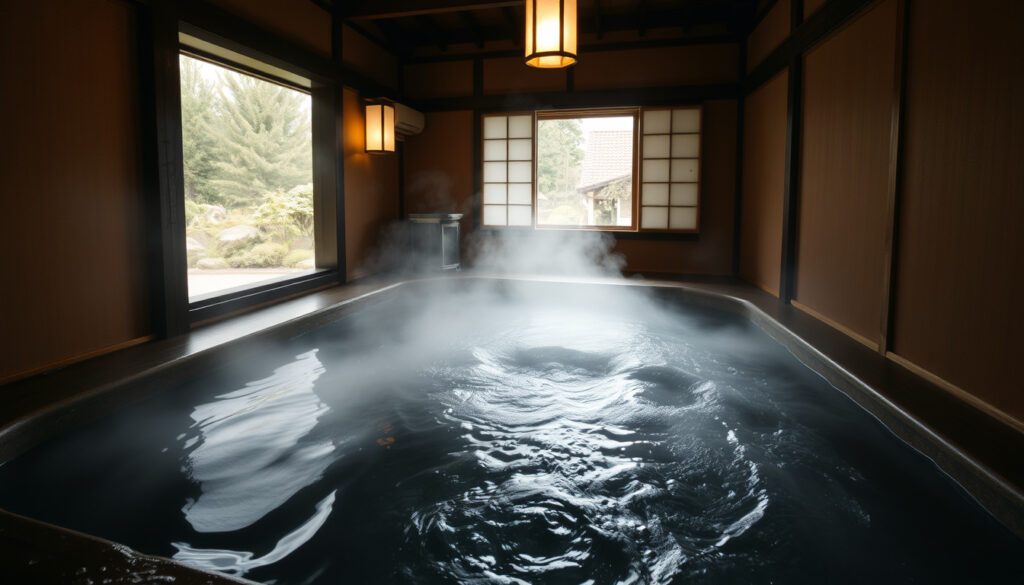
Yes. Onsen Ryokan Yuen Shinjuku operates a natural hot spring bath fed by genuine spring water. The UDS Hotels official site describes the property as a “calm, quiet space with minimalist beauty”. The bathhouse sits on the 18th floor and consists of one indoor bath and one outdoor rotenburo per gender, according to the Tattoo Friendly Onsen blog. Both sides reportedly face the Tokyo skyline, so the city lights become part of the soak.
What type of onsen is available?
- 100% natural spring water (indoor bath) – verified by UDS Hotels
- Outdoor rotenburo on the 18th floor (Tattoo Friendly Onsen)
- Each guest room also includes a private bath (The Tokyo Chapter blog)
Bottom line: Yuen Shinjuku is what it claims to be: a real ryokan with real onsen water, not a chlorinated spa. Travelers who want skyline views without leaving the bath should book this option. Travelers who need private outdoor access should book the Premier room tier.
An 18th‑floor onsen means panoramic views and a narrow window for sunrise soaking (6 a.m.–10 a.m.). Early risers get the best light; late risers lose the morning session entirely.
Onsen Etiquette at Yuen Shinjuku: What You Need to Know
Japanese onsen etiquette can feel like a minefield to first‑timers. At Yuen Shinjuku the rules are standard for a mid‑range ryokan, but three points trip up most foreign guests.
Can you wear swimwear or underwear in the onsen?
- No. Guests are expected to undress completely in the locker room before entering the bathing area (Reddit r/TokyoTravel etiquette PSA).
- The only acceptable item is the long, skinny towel provided in the room, which you may carry into the bath area for modesty but never dip into the water.
- Tattoos are generally not allowed, but small tattoos can be covered with a sticker available at the front desk (The Tokyo Chapter).
What is the 5‑minute rule in Japan?
The “5‑minute rule” is a practical guideline to prevent overheating in naturally hot spring water. Many onsen run between 40°C and 43°C, and staying in longer than 5–10 minutes can cause dizziness or dehydration. It’s not a law, but most regular bathers observe it as a safety habit (MAIKOYA etiquette guide).
Step‑by‑step onsen bathing procedure
- Undress completely in the locker room. Place clothes in a basket or locker.
- Rinse your body at a shower station with soap before entering the bath (per Reddit r/TokyoTravel).
- Enter the bath slowly — immerse only up to the shoulders.
- Keep the small towel on your head or on the side of the bath (never let it touch the water).
- Soak for 5–10 minutes, then cool off if needed.
- After the bath, rinse off with the shower again (soap is optional at that point).
An etiquette slip — like taking your phone into the bath — can get you a warning or asked to leave. The Tokyo Chapter notes that the property patrols for compliance. First‑time visitors should treat the bath like a silent library rather than a pool.
Bottom line: Yuen Shinjuku enforces the same rules as most Japanese onsen. Travelers without tattoos get a full green light. Travelers with tattoos should request a sticker at the front desk or choose a different onsen.
Average Cost per Night and Why Onsen Ryokan Are Expensive
Nightly rates at Onsen Ryokan Yuen Shinjuku typically range from roughly $120 for a standard double to nearly $500 for the Premier room, according to KAYAK sample deals (22 May 2026). King rooms land around $318. The wide spread reflects season, room size, and whether breakfast is added.
What drives the high cost?
- Location: Central Shinjuku real estate commands a premium.
- Natural onsen water – drilling and maintaining a geothermal well in a dense urban ward is expensive.
- Traditional hospitality (omotenashi) – staff‑to‑guest ratio is higher than a typical business hotel.
- Breakfast included – Asian breakfast sets are factored into rate calculations.
$120–$499 per night is competitive for a Tokyo ryokan with an onsen, but the price buys you time (15‑minute walk to the station) and quiet, not luxury square footage. Guests who expect a full resort with gardens will be disappointed.
The pattern: the cost reflects the scarcity of natural geothermal water in central Tokyo, not room size or amenities.
Onsen vs Ryokan: What’s the Difference?
Onsen refers specifically to a hot spring bath facility. Ryokan is a traditional Japanese inn. A ryokan with onsen — like Yuen Shinjuku — combines both. You sleep in tatami‑matted rooms, eat Japanese breakfast, and have access to a natural spring bath. If you’re considering a used car, check out this guide to buying used cars in Singapore at $guide to buying used cars in Singapore.
The difference matters for budget and expectation. A pure onsen (day spa) may cost ¥1000–3000. A ryokan with an onsen typically costs ¥20 000–60 000 per night. Yuen Shinjuku falls at the affordable end of that spectrum, but still sits above a business hotel. The implication: guests pay for the hybrid experience, not just the bath.
Yuen Shinjuku Onsen Hours, Location, and Booking Information
Getting the operational details right saves a wasted trip. The official site and aggregators agree on the schedule, but a change is coming.
Onsen hours
- Morning: 6:00 a.m. – 10:00 a.m.
- Evening: 3:00 p.m. – 2:00 a.m.
- Important change: Hours will be revised from 1 November 2026 (UDS Hotels official site).
Address and access
Address: 5‑17‑13 Shinjuku, Shinjuku‑ku, Tokyo 160‑0022. The property is a 15‑minute walk from Shinjuku Station’s east exit, located in a quiet residential area (Reddit TokyoTravel user). No shuttle is provided, so budget for a taxi if you have heavy luggage.
How to book
The catch: booking directly via UDS Hotels may offer the best rate guarantee, but OTA platforms often show real-time availability comparisons.
Where to Avoid in Shinjuku? Navigating the Neighborhood Around Yuen
Shinjuku is a district of extremes. The busy Kabukicho area, known for nightlife crowds and host clubs, is about 20 minutes walk from Yuen Shinjuku and can be less suitable for families or solo travelers after dark (Guest Reservations). The area around the hotel, by contrast, is a quiet residential pocket that offers convenience without the noise.
- Safer/better for families: The Yuen area itself, and the Shinjuku Gyoen park side (closer to the hotel).
- Less recommended: Kabukicho red‑light district late at night; the north exit of Shinjuku Station after midnight.
The implication: the 15‑minute walk to the station passes through a mix of grocery stores and small restaurants, not salacious neon. Guests who want to dive into nightlife will find it walkable but not next door.
Upsides
- Genuine natural hot spring water in central Tokyo
- Minimalist, calm atmosphere on 18th floor
- Private bath in every room
- Asian breakfast included or available
- Free WiFi throughout
Downsides
- 15‑minute walk from station (no shuttle)
- Onsen hours may change after Nov 2026
- Strict tattoo policy (small stickers available)
- Premium pricing vs. ordinary business hotels
- No fitness centre or pool
What Verified Guests and Published Guides Say
“The property is marketed as a calm, quiet space with minimalist beauty.”UDS Hotels official site
“It’s about a 15‑minute walk from Shinjuku station, but in a quiet residential area.”Reddit user on r/TokyoTravel
The property itself leans heavily on the concept of “urban onsen” — offering a traditional soak without leaving the city. For travelers who weigh convenience against cultural authenticity, Yuen Shinjuku is a rare middle ground.
Bottom line: Onsen Ryokan Yuen Shinjuku is what it claims to be: a genuine onsen ryokan inside the Yamanote line. Travelers who prioritize an authentic soak and don’t mind a 15‑minute walk should book it. Travelers who want a resort‑style stay with gardens and multi‑course kaiseki should look for a ryokan in Hakone instead.
For a broader perspective on bathing culture across Japan, consider this comprehensive onsen hotel guide covering etiquette and top picks.
Frequently asked questions
What is the best time to visit the onsen at Yuen Shinjuku?
Early morning (6–8 a.m.) is least crowded and the water is freshest. Late‑night soaks (after 10 p.m.) also tend to be quiet.
Is the onsen open to non‑guests?
No, the onsen is reserved for hotel guests only.
Are there separate male and female onsen areas?
Yes, the baths are segregated by gender. The indoor and outdoor baths are separate for men and women.
Does Yuen Shinjuku provide yukata and towels?
Yes, yukata robes and towels are provided in the room. The long skinny towel is for the onsen.
More related posts
 Lee Jong Suk and IU Relationship: Timeline & Net Worth
 Aljunied GRC 2020 Results: Workers’ Party Wins 59.93%
 What Is a Z Fold Phone? A Comprehensive Guide to Samsung’s Foldable
 100 Singapore Dollars to Malaysian Ringgit: Rate & Conversion Guide
 Cleveland Cavaliers vs Pacers Timeline: Head-to-Head History
 Far East Plaza Watch Shop – Best Shops Guide 2025
 Kok Kee Wanton Mee – Location, Menu, Prices and Reviews in KL
 Cross Island Line Phase 1: Stations, Map & 2026 Update
