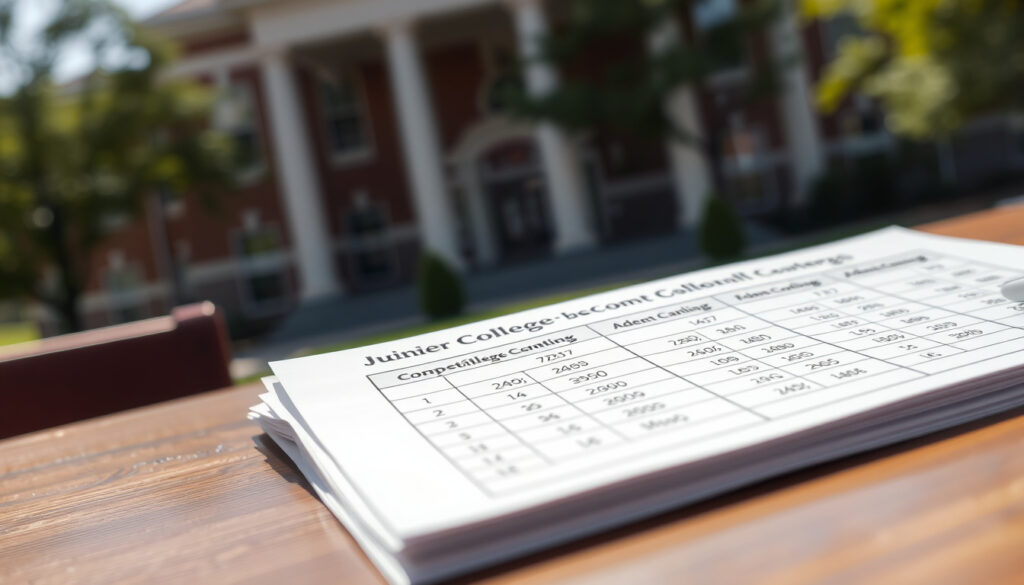
JC Cut Off Points 2025: Complete Guide & Ranking
Few numbers in a teenager’s year carry as much weight as the JC cut-off points, deciding not just which junior college you get into but often the subject combos and opportunities waiting inside. The 2025 cut-off scores across every JC in Singapore show what they mean for Arts and Science streams, and the one change on the horizon that could rewrite the rulebook.
Total JCs in Singapore: 19 ·
Lowest cut-off (Science): 2 points ·
Lowest cut-off (Arts): 2 points ·
Average cut-off range: 2–20 points ·
JCs using L1R5: All 19 ·
2025 changes from 2024: Minimal, slight shifts at some schools
Quick snapshot
- JC cut-off points are the minimum L1R5 aggregate for admission (Illum Education (Singapore JC admissions guide))
- Top JCs require 2–5 points; Raffles Institution and Hwa Chong Institution are the most competitive (MathTutor Singapore (JC cut-off research))
- L1R5 is still the scoring system for 2025 admission (Ministry of Education Singapore (official policy statement))
- MOE announced a shift to L1R4 for the 2028 JAE cohort (Ministry of Education Singapore (policy announcement))
- Whether L1R4 will fully replace L1R5 in future years beyond 2028
- Exact cut-off points for 2026 won’t be known until JAE results are released
- How individual JCs will adjust subject-combination criteria under L1R4
- Late January 2025 – JAE results released (MOE schedule reference)
- February 2025 – JC1 admission exercise begins (MOE schedule reference)
- March 2025 – Appeal window opens (MOE schedule reference)
- March 2025 – MOE announces L1R4 reform for 2028 cohort (Ministry of Education Singapore)
- Students should calculate their L1R5 using the official JAE table now
- Prepare a ranked list of up to 12 JC choices
- Appeals process available for borderline scores – submit by March
Five key figures sum up the JC landscape this year – from the most selective schools to the most accessible.
| Metric | Value |
|---|---|
| Number of JCs | 19 |
| Lowest Science cut-off | 2 points (RI, HCI) |
| Lowest Arts cut-off | 2 points (RI) |
| Highest cut-off | 20 points (YIJC) |
| Most competitive JC | Raffles Institution |
What is the cut-off point for JC 2026?
Understanding the 2025 cut-off point context
- JC cut-off points are the minimum L1R5 aggregate score required for admission, determined each year after the JAE results are released (Illum Education).
- 2025 cut-off points reflect the actual scores of students who entered JC1 in 2025, not predictions.
- Because the system is demand-driven, 2025 scores serve as the best available baseline for estimating 2026 thresholds – though they can shift by a point or two.
How cut-off points are set each year
- After the JAE posting exercise, MOE publishes the lowest L1R5 aggregate that secured entry to each school and stream (MathTutor Singapore).
- If a JC receives more applicants than places, the cut-off rises; if demand drops, it falls.
- The 2025 cohort shows a tight spread of 2–20 points across all 19 JCs, with the bulk clustered between 6 and 15.
The pattern: 2025 data provides the most concrete benchmark available for 2026 planning, but students should prepare for minor fluctuations.
How many points to go into JC?
L1R5 score range for JC admission
- Eligibility for JC requires an L1R5 score of 20 or below, as confirmed by MOE-linked school briefings (Pasir Ris Secondary School (MOE-linked parent briefing)).
- The lowest possible score is 0 (perfect aggregate), but in practice top JCs set cut-offs between 2 and 5.
- Science streams generally demand 1–3 points lower than Arts streams for the same school (Sophia Education (Singapore JC admissions analysis)).
Minimum requirements for different streams
- Raffles Institution Science cut-off: 2 points; Arts: 2 points (MathTutor Singapore).
- Hwa Chong Institution Science: 3 points; Arts: 5 points.
- Yishun Innova JC Science: 18–20 points; Arts: 20 points (SG Schooling (community JC rankings)).
For most mid-tier JCs, the Science-Arts gap is about 1–2 points. At elite schools, it can stretch to 3 points – meaning an Arts applicant needs a noticeably stronger aggregate to secure the same seat.
The implication: stream choice matters as much as total score when targeting specific JCs.
Which JC has the lowest cut-off point?
Top JCs with lowest cut-off points (2025)
The six most competitive JCs and their 2025 cut-off points by stream reveal a clear hierarchy.
| Junior College | Science cut-off | Arts cut-off |
|---|---|---|
| Raffles Institution | 2 | 2 |
| Hwa Chong Institution | 3 | 5 |
| Eunoia Junior College | 6 | 8 |
| Victoria Junior College | 6 | 7 |
| National Junior College | 7 | 8 |
| Temasek Junior College | 7 | 9 |
Six JCs, one pattern: the most selective schools demand near-perfect scores, while the gap between Arts and Science is widest at Hwa Chong (MathTutor Singapore; SG Schooling).
Comparison of Raffles Institution, Hwa Chong, etc.
- Raffles Institution and Hwa Chong remain the most competitive, with combined cut-offs rarely exceeding 5 (MathTutor Singapore).
- Eunoia JC’s Science cut-off of 6 reflects stable demand since its founding (SG Schooling).
- Temasek Junior College – often the safety pick for top-scoring students – holds at 7–9 points, with an Arts award for L1R5 of 7 or better (Temasek Junior College (official JC1 infosheet)).
The implication: A difference of just 1 point can separate your first choice from your third. Strategic ranking matters more than raw score.
What is the cut off for EJC 2025?
Eunoia Junior College cut-off points 2025
- Eunoia JC (EJC) Science cut-off: 6 points; Arts: 8 points, according to multiple 2025-style tables (Sophia Education).
- These thresholds have remained stable since EJC’s founding in 2017, indicating consistent demand.
- An L1R5 of 6 (Science) or 8 (Arts) places EJC in the top tier, just behind RI and HCI.
Trends for EJC over recent years
- EJC’s cut-offs have not fluctuated by more than 1 point annually.
- The school’s relatively young reputation and strong humanities programme keep its Arts stream competitive.
- Appeals for EJC are considered only for borderline scores – typically within 1 point of the official cut-off.
If L1R4 replaces L1R5 in 2028, EJC’s cut-offs will be recalculated. Current students applying in 2025–2027 should treat the 2025 numbers as the baseline, not the ceiling.
The catch: stability in cut-offs doesn’t guarantee future access, especially with the L1R4 reform on the horizon.
Is JC still L1R5?
L1R5 vs L1R4: the new admission criteria
- Yes, as of 2025, all JCs use the L1R5 aggregate (English + 2 relevant subjects + 2 best others) for admission (MOE parent briefing 2025).
- The Ministry of Education announced a future shift to L1R4 (English + 2 relevant subjects + 1 best other) with an aggregate of 16 or less, effective for the 2028 JAE cohort (Ministry of Education Singapore (policy press release)).
- School briefings in early 2025 still reference L1R5 ≤ 20, confirming the transition is not immediate.
What the change means for 2025 applicants
- For 2025 and 2026–2027 cohorts, the rules are unchanged: L1R5 ≤ 20 is the eligibility floor.
- The March 2025 MOE policy package “Thriving Together” explicitly sets a 2028 timeline (MOE official announcement).
- Current students should not worry about the switch – it will only affect those taking O-Levels in 2027 or later.
What this means: current applicants can focus on the familiar L1R5 system without worrying about the 2028 transition.
How to apply for JC admission in 2025
Step-by-step guide to the JAE process
- Receive your GCE O-Level results in late January 2025.
- Calculate your L1R5 aggregate: English + two relevant subjects (Humanities or Science according to stream) + two best remaining subjects.
- Log in to the JAE portal (online) during the submission window (typically 3–5 days).
- Rank up to 12 JC choices in order of preference. Use the 2025 cut-off table to identify realistic options.
- Submit the application before the deadline.
- Appeals can be made in March if you did not receive your first choice (check each JC’s appeal process).
The implication: early preparation and strategic ranking can make the difference between a first-choice posting and a fallback option.
Confirmed vs unclear: what we know for sure
Confirmed facts
- 2025 cut-off points are based on JAE 2025 results (MathTutor Singapore)
- L1R5 is still the scoring system for 2025 admission (Pasir Ris Secondary School parent briefing)
- Top JCs (RI, HCI) require 2–5 points (Illum Education)
What’s unclear
- Whether L1R4 will fully replace L1R5 in future years
- Exact cut-off points for 2026 until JAE results are released
- How individual JCs will adjust subject combinations under L1R4
The pattern: the confirmed facts outnumber the uncertainties, giving students a solid foundation for decision-making.
Expert perspectives on 2025 JC admission
“The revised JC admission criterion from L1R5 to L1R4 will take effect for the 2028 JAE cohort, aiming to provide greater flexibility for students.”
– MOE spokesperson (official policy statement, March 2025)
“The 2025 cut-off points show a clear trend: demand for Science streams remains high at top-tier JCs, while Arts streams offer slightly more accessible entry points for students with strong subject-combination choices.”
– Education consultant at Learners Lodge (analysis of 2025 cut-off trends)
For students targeting top JCs, the choice is clear: aim for an L1R5 of 5 or better to keep Raffles, Hwa Chong, or Eunoia in reach. For those scoring between 12 and 20, mid-tier JCs offer strong programmes and growing reputations – and the L1R4 reform on the horizon may open even more doors by 2028.
learnerslodge.com.sg, jceconomicstuition.com.sg, ganengsengsch.moe.edu.sg
Frequently asked questions
What is the difference between L1R5 and L1R4?
L1R5 includes English, two relevant subjects, and two best other subjects (total six subjects, but five count). L1R4 includes English, two relevant subjects, and one best other subject (four subjects). MOE announced a switch to L1R4 for the 2028 JAE cohort.
Can I use my EAE score for JC admission?
EAE (Early Admissions Exercise) is for polytechnics, not JCs. For JC, you must go through the JAE using your O-Level L1R5 aggregate.
How do I calculate my L1R5 score?
Add your English grade (1 for A1, 2 for A2, etc.) to the grades of two relevant subjects for your chosen stream (e.g., Humanities for Arts, Science for Science), then add your two best other subjects. The total must be 20 or below for JC eligibility.
What if my score is exactly the cut-off point?
If your L1R5 matches the cut-off, you may still be posted depending on the number of available places. MOE uses tie-breakers such as citizenship and order of choice.
Are there any JCs that accept students with 20 points?
Yes – Yishun Innova JC typically sets its cut-off at 18–20 points for both Arts and Science streams (SG Schooling). Millennia Institute uses L1R4 and accepts below 20.
Do I need to take H2 subjects to get into a top JC?
No – H2 subjects are chosen after admission. But top JCs often expect strong O-Level results in the subjects you plan to take at H2 level.
What is the appeal process for JC1 admission?
Appeals typically open in March after the JAE posting. You should contact the JC directly and submit your O-Level results slip along with a written appeal. Some JCs consider borderline scores (within 1–2 points of the cut-off).
How do cut-off points change from year to year?
They shift based on overall cohort performance and school popularity. Generally, movements of 1–2 points are common, but elite JCs tend to remain stable.
The bottom line: understanding the system and preparing early gives students the best chance of securing their preferred JC placement.
More related posts
 Singapore MRT Map 2026 Download & New Stations
 Ya Kun Kaya Toast Menu: Prices, Tips & How to Eat
 National Dental Centre Singapore: Appointments, Fees & Directions
 Halal Food at Jewel Changi Airport: Guide 2025
 Is the Google Data Analytics Professional Certificate Worth It
 Cathay Century Square closure: reasons, replacement & legacy
 Blue Jays vs Mariners: Complete 2026 Season Series Analysis & Key Questions
 iPhone 15 Pro Max Size: Dimensions, Weight & Screen Specs
