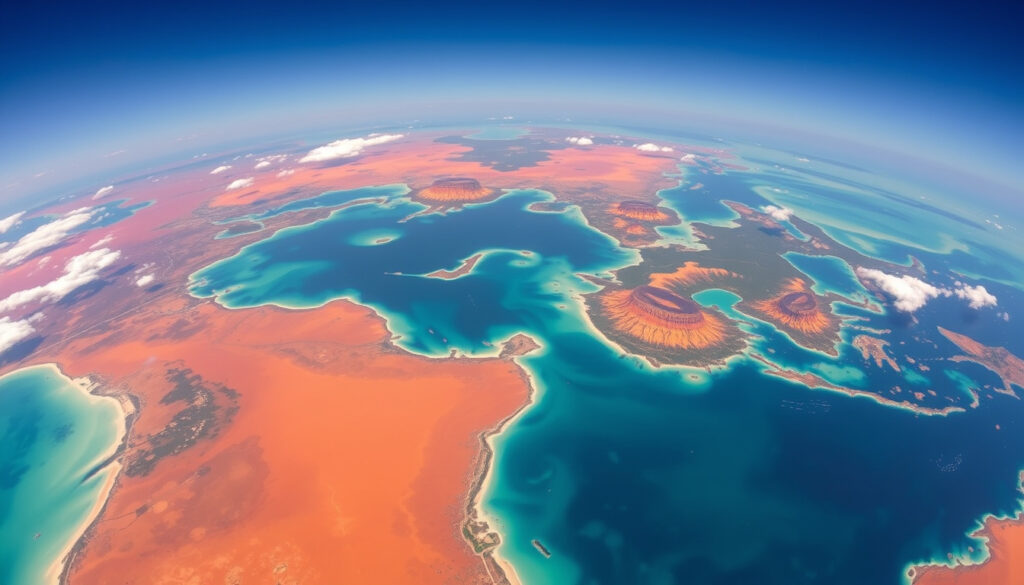
Is Australia Part of Asia? Geography, Sports & Facts
It’s one of the first questions travelers ask when planning a trip Down Under, and it’s sparked plenty of heated debates at sports bars: is Australia actually part of Asia? Geographically, the answer is straightforward—but Australia’s sports allegiances tell a much stranger story, with the Socceroos competing in Asian competitions while sitting on their own continental shelf thousands of kilometers away from mainland Asia.
Continent: Australia (Oceania) ·
Official Name: Commonwealth of Australia ·
Football Confederation: AFC (Asia) ·
Area: 7,688,287 km²
Quick snapshot
- Australia is the smallest of the seven traditional continents (Wikipedia – Australia (continent))
- Australia occupies 7,688,287 km², making it the sixth-largest country globally (Wikipedia – Geography of Australia)
- Australia competes in AFC (Asian Football Confederation) as a full member since July 1, 2006 (AFC Official)
- Whether Australia’s classification in non-English educational systems will shift over time (Wikipedia – Oceania)
- Future expansion of non-football sports into Asian confederations (Wikipedia – Oceania)
- Australia joined AFC on 2006-07-01, becoming the confederation’s 46th member (AFC Official)
- Won AFC Asian Cup in 2015, cementing its position in Asian football (Wikipedia – 2015 AFC Asian Cup)
The table below distills the core data points about Australia’s continental and confederation status.
| Label | Value |
|---|---|
| Continent | Australia (Oceania) |
| Country Status | Sovereign nation |
| Football Confederation | AFC (Asia) |
| Geographic Neighbors | Maritime Southeast Asia |
| Population (2026 est.) | 27,227,096 |
| Average Elevation | 330 meters |
Is Australia considered part of Asia?
No—geographically, politically, and culturally, Australia is not part of Asia. Australia sits on its own continental shelf, the Australian plate, which is separate from the Eurasian plate that defines Asia geographically. According to Britannica encyclopedia, Australia is the smallest continent and one of the largest countries on Earth.
Geographical Classification
The Australian continent encompasses mainland Australia, Tasmania, New Guinea, the Aru Islands, and nearby territories—all sitting on the Australian tectonic plate. The continent is sometimes called Sahul or Australia-New Guinea to distinguish it from the country itself, according to geographical records.
This geographical separation from Asia is reinforced by the presence of plate boundaries: the Indian Ocean lies between Australia and the Asian mainland, creating a clear demarcation.
Papua New Guinea, the closest landmass to Australia, shares the same continental shelf and is considered part of the same geological continent.
Geologists draw a hard line at tectonic plates—Australia belongs to Sahul, its own continental mass, while Asia sits on the Eurasian plate thousands of kilometers away.
The implication is that geographic definitions resist political convenience: no matter how integrated Australia becomes with Asian neighbors, the plates underneath tell a different story.
Political and Cultural Context
Australia maintains its own foreign policy, defense arrangements, and cultural identity rooted in its Oceanic and Western heritage rather than Asian regional identity. While Australia participates in Asian economic forums and has strong trade relationships with Asian nations, its continental classification remains firmly in the Oceania camp.
Australia’s external territories like Christmas Island and Cocos (Keeling) Islands actually sit closer to Java, Sumatra, and the rest of Southeast Asia than to the Australian mainland—creating a geographical paradox where tiny Australian-administered lands are genuinely Asian while the continent itself is not.
What continent is Australia?
Australia is the mainland of the Australian continent, conventionally the smallest of the seven continents on Earth. NationsOnline.org established reference portal confirms this classification, noting that Australia as a continent encompasses a landmass that ranks among the world’s largest territorial divisions.
Defining the Australian Continent
The Australian continent covers approximately 7,688,287 km², making it the smallest continental landmass while simultaneously ranking as the sixth-largest country by area, according to geographical data. The continent sits on the Australian tectonic plate, which is geologically stable with an average elevation of just 330 meters—the lowest of all continents.
At 330 meters average elevation, Australia’s terrain ranks as the flattest of any continent—a geological distinction that surprises many travelers expecting more dramatic topography.
The geographical median of the continent sits at coordinates 23°33′S 133°23′E, placing it firmly in the Southern Hemisphere and far from Asian landmasses.
Relation to Oceania
Oceania is the broader geographical region that encompasses Australia and other Pacific island nations. According to regional definitions, Oceania spans 14 countries and is divided into four subregions: Australasia, Melanesia, Micronesia, and Polynesia. Australia sits within the Australasia subregion alongside New Zealand.
In non-English-speaking countries, Oceania is frequently treated as a continent in its own right, with Australia viewed as an island nation within it. This creates international classification variations that can cause confusion when discussing continental boundaries.
Why is Australia in the Asia Cup?
Australia competes in the AFC Asian Cup despite its oceanic geography because the country switched football confederations in 2006—a decision that remains one of the most significant in global sports history.
Switch from Oceania to AFC
FIFA approved Australia’s move from the Oceania Football Confederation (OFC) to the Asian Football Confederation on June 30, 2006, with the official AFC membership beginning on July 1, 2006, according to AFC records. The AFC currently has 47 member nations; Australia joined as the confederation’s 46th member.
The move was not unprecedented—Israel had earlier switched from UEFA to AFC due to geopolitical circumstances, establishing a precedent for non-Asian nations joining the confederation, according to football governance research.
Competitive Reasons
The driving force behind Australia’s decision was straightforward: Sports policy analysis from Soccer Australia shows the shift was driven by the lack of competitive opposition in Oceania. Playing against teams like New Zealand, Fiji, and Tahiti offered minimal preparation for World Cup qualification.
Joining the AFC meant regular matches against established football powers like Japan, South Korea, and Iran—opponents that pushed Australian football to improve.
New Zealand remains in the OFC, highlighting the regional split in sports confederations. The All Whites continue competing in Oceania while the Socceroos face teams like Japan, South Korea, and Iran—the trade-off being stronger competition versus geographic accuracy.
What this means is that geography yields to competitive reality: the Socceroos accepted the anomaly of playing in Asia to gain access to world-class opposition.
Is Australia part of Asia in sports?
In football, absolutely yes. Australia is a full member of the AFC and competes in Asian competitions, representing one of the most unusual sports-geography mismatches in international athletics.
Asian Football Confederation Membership
Australia competes in AFC for football due to competitive reasons, despite its oceanic geography. The AFC official statement on Australia’s entry welcomed the nation “to Asia”—a symbolic acknowledgment of the anomaly.
The Socceroos have found considerable success in their new confederation: they won the AFC Asian Cup in 2015 on home soil, defeating South Korea 2-1 in the final, according to tournament records. Australia qualified for the 2018 and 2022 FIFA World Cups through the AFC qualification pathway, advancing to the knockout stages in 2022.
These achievements demonstrate that the AFC membership has elevated Australian football, providing regular high-level competition that simply did not exist in Oceania.
Asian Games Participation
Beyond football, Australia participates in various Asian sporting events and maintains membership in several Asian sporting bodies where competition levels warrant the arrangement. However, some events like the Asian Games have specific rules about Australian participation that vary by sport and year.
FIFA’s official documentation states that Australia’s AFC membership is unique as the only non-Asian continent member in the confederation—a position that breaks the neat geographical boundaries used in virtually every other global classification system.
The pattern reveals that sporting bodies prioritize competitive merit over geographical accuracy, creating exceptions that complicate how we categorize nations.
Is Australia part of Asia-Pacific?
Yes—and this distinction matters significantly. Asia-Pacific is a geopolitical and economic grouping, not a geographical classification, which is why Australia fits comfortably within it despite not being part of continental Asia.
Regional Grouping Definitions
The term Asia-Pacific refers to the countries around the rim of the Pacific Ocean, encompassing East Asia, Southeast Asia, Oceania, and the Americas’ Pacific coast. This grouping emphasizes economic and strategic relationships rather than continental boundaries.
Australia’s membership in regional bodies like APEC (Asia-Pacific Economic Cooperation) and its active participation in the ASEAN Regional Forum reflects this economic and security integration with Asian nations, according to regional analysis.
Being part of Asia-Pacific means Australia engages with Asian economies as a peer—not as a distant island nation, but as a regional partner with substantial stakes in Pacific affairs.
Economic and Political Ties
Australia’s largest trading partners are China, Japan, South Korea, and other Asian nations, making the Asia-Pacific designation economically accurate. The country’s foreign policy explicitly incorporates “Asia engagement” as a strategic priority, despite the clear geographical distinction between Oceania and Asia.
Australia’s integration into Asia-Pacific frameworks shows that economic interdependence sometimes matters more than continental lines on a map.
“Australia is the smallest continent and one of the largest countries on Earth.”
— Britannica Editors (Encyclopedia)
“Australia’s switch to the AFC was approved, making it the only non-Asian continental member in the confederation.”
“Australia competes in AFC for football due to competitive reasons, despite oceanic geography.”
— AFC (Confederation)
For travelers and sports fans alike, the practical takeaway is simple: Australia is geographically an oceanic continent, not Asian, but in football and broader geopolitical terms, it behaves like an Asian nation. This creates the confusion—but also the fascinating anomaly that makes Australia unique in the world of international sports.
Upsides
- Access to stronger competition, raising national football standards
- World Cup qualification through highly competitive qualifying pathway
- Regional economic integration through Asia-Pacific frameworks
- AFC Asian Cup victory in 2015 demonstrated competitive capability
Downsides
- Geographical mismatch between sports and physical location
- Oceania nations like New Zealand remain in separate confederation
- Limited Pacific island participation in major Australian competitions
- Confusion persists among international audiences about classification
The pattern is clear: Australia’s sporting choices prioritize competitive reality over geographical neatness. The Socceroos and their supporters have benefited from tournament success and global visibility through AFC membership. For geographers, Australia remains a useful reminder that the world’s political and sporting boundaries rarely match the Earth’s physical structure.
“"Australia is the smallest continent and one of the largest countries on Earth"”
“"Welcome to Asia" – on Australia’s AFC entry”
Related reading: Perth Weather in December · A-League Standings
Geography firmly separates Australia from Asia, given its continental status as both the smallest continent and part of Oceania.
Frequently asked questions
Is Australia geographically part of Asia?
No. Australia is geographically part of Oceania, not Asia. The Australian continent sits on its own tectonic plate, entirely separate from the Eurasian plate that defines continental Asia. The Indian Ocean physically separates Australia from the Asian mainland.
What is Oceania?
Oceania is a geographical region encompassing Australia, New Zealand, and thousands of Pacific islands. It spans 14 countries and is divided into four subregions: Australasia, Melanesia, Micronesia, and Polynesia. Oceania is sometimes treated as a continent in non-English educational systems.
Why did Australia join the Asian Football Confederation?
Australia joined the AFC in 2006 because the Oceania Football Confederation lacked competitive opponents. The move allowed the Socceroos to face stronger Asian teams and pursue World Cup qualification against more challenging competition than available in Oceania.
Is Australia considered Western or Eastern culturally?
Australia is considered culturally Western, with British and European heritage dominant. However, its proximity to Asia and strong economic ties with Asian nations mean it occupies a unique position as a Western nation embedded in an Asian-centric economic region.
Does Australia participate in all Asian sports events?
Not all. Australia participates in Asian competitions primarily in football through the AFC. Other sports may maintain Oceanian or international affiliations. The Asian Games participation varies by sport and is determined by specific sporting federations.
What is the difference between Asia and Asia-Pacific?
Asia is a geographical continent, while Asia-Pacific is a geopolitical grouping that includes Asian nations plus Pacific Rim countries like Australia, New Zealand, and the Americas. Australia is in Asia-Pacific but not in continental Asia.
Is Tasmania part of the Australian continent?
Yes. Tasmania is part of the Australian continent, sitting on the same continental shelf as mainland Australia. The Bass Strait separates Tasmania from the mainland, but geologically they remain part of the same continental landmass.
More related posts
 National Dental Centre Singapore: Appointments, Fees & Directions
 Nose Thread Lift Singapore: Cost, Procedure & Risks
 Latest COE Results Today: June 2026 Prices & Release Time
 Woodlands Checkpoint Traffic Live: Map & Cameras
 H&M Suntec City: Location, Hours, Discounts & Store Guide (2025)
 Zyon Grand Floor Plan – Sizes Layouts and Access Guide
 2026 Malaysia School Holiday – Official Dates for Group A and B
 iPhone 15 Pro Max Size: Dimensions, Weight & Screen Specs
