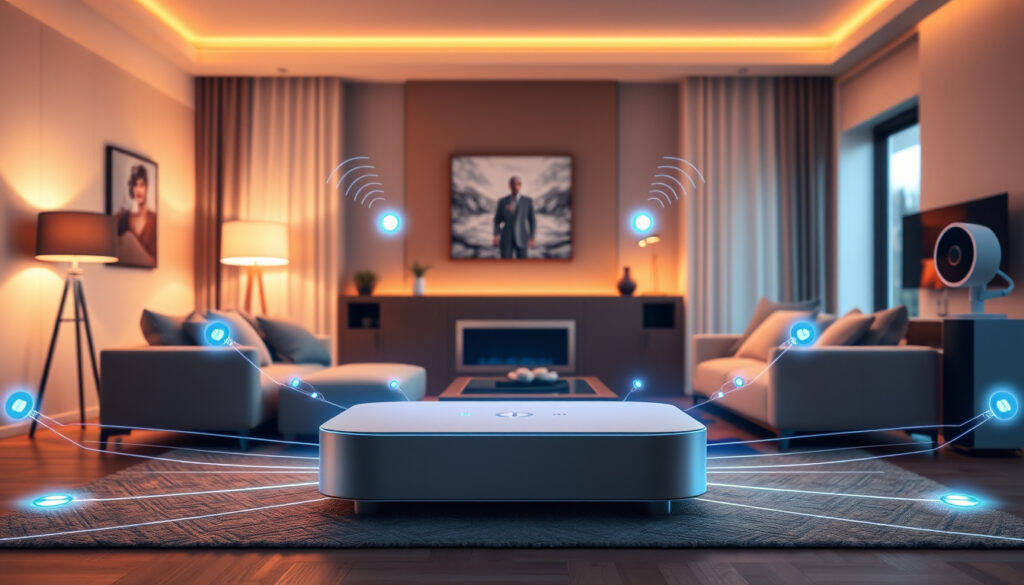
Best Smart Home Hubs 2026: Expert Tested Top Picks
If you’ve spent any time building out a smart home, you know the feeling: devices that won’t talk to each other, apps that don’t sync, and that nagging question of whether you picked the right hub to tie it all together. In 2026, the smart home hub landscape has gotten both better and more complicated, with the Matter standard finally delivering on its promise of cross-platform compatibility. Here’s what expert testing and real user feedback say about the best options right now.
Top Pick (Tom’s Guide): Aeotec Smart Home Hub ·
Best Display (CNET): Amazon Echo Show 11 ·
Best DIY Hub (PCWorld): Samsung SmartThings Station
Quick snapshot
- Aeotec #1 for broad support (Tom’s Guide)
- Echo Show 11 tops smart displays (Tom’s Guide)
- Exact 2026 market leader shifts with rapid updates
- Home Assistant best hub varies by setup complexity
- 2026: Matter now universal standard
- 2021: Samsung discontinued own hub hardware
- Cross-ecosystem bridges maturing fast
- DIY hubs gaining mainstream traction
| Label | Value |
|---|---|
| Leading Hub (Tom’s Guide) | Aeotec Smart Home Hub |
| Best Smart Display (CNET) | Amazon Echo Show 11 |
| DIY Pick (PCWorld) | Samsung SmartThings Station |
| Reddit Praise | Google Nest for automations |
Best smart home hub with screen
Screen-equipped hubs let you control devices with a tap, view camera feeds, and manage automations without reaching for your phone. For most households, that convenience justifies the premium over basic voice-only speakers.
Top recommendations
The Amazon Echo Show 11 takes the top spot for overall smart display performance according to expert reviews, combining a rotatable 11-inch screen with full Fire TV integration and home control widgets at around $220. Google’s Nest Hub Max, released in September 2019 with a 10-inch display and 6.5 MP camera, remains the best option for Google Home households, now enhanced with Gemini AI support. For those wanting the largest screen available, the Amazon Echo Show 21 features a 21-inch display—currently the biggest on the market.
Key features
Screen hubs blur the line between smart speaker and tablet. The Nest Hub Max’s camera enables gesture controls and video calls, while both platforms support threaded conversations and visual routines. Budget-conscious buyers can look at the Echo Show 8 (4th Gen), which delivers most flagship features in a more compact 8-inch form factor.
Compatibility notes
The Google Pixel Tablet with its charging dock functions as a smart home hub but notably lacks Thread support—something the Nest Hub Max includes. This gap matters if you’re building around future-proofed Matter devices that rely on Thread’s low-power mesh networking.
Screen hubs cost significantly more than their screenless counterparts and are tied to their respective ecosystems. If you’re all-in on Alexa, an Echo Hub makes sense; switching platforms means the hardware becomes less useful.
Smart home hub for all devices
If compatibility is your north star, some hubs speak more languages than others. The protocol landscape—Zigbee, Z-Wave, Thread, Matter, Wi-Fi, Bluetooth—determines which devices can join your network without adapters or workarounds.
Universal compatibility
The Aeotec Smart Home Hub stands out as the most compatible option for 2026, supporting Zigbee, Z-Wave, Nest, Thread, and Matter through its partnership with Samsung SmartThings. Tom’s Guide rated it number one specifically for buyers prioritizing broad device support over simplicity. Unlike proprietary hubs that lock you into one ecosystem, Aeotec lets you mix protocols freely.
Supported protocols
Understanding the protocol stack matters more than ever as Matter matures. Wi-Fi and Bluetooth come standard on nearly every hub, but Zigbee and Z-Wave support requires dedicated hardware—and not all hubs include both. The Aeotec hub covers all the major protocols, while budget options like the Echo Dot (5th Gen) stick to Wi-Fi, Bluetooth, and Matter only, omitting Zigbee and Z-Wave entirely.
Limitations
Aeotec packs more power but demands more setup effort. Tom’s Guide notes it’s notably more complex than Amazon’s plug-and-play approach, making it better suited for enthusiasts than beginners. The screenless design also means no visual feedback without opening the SmartThings app.
The gap between “works with my lights” and “works with every device I might ever buy” is measured in protocols. If you’re starting fresh with Matter-only devices, a simpler hub suffices. If you’re migrating a legacy setup with Z-Wave sensors and Zigbee bulbs, Aeotec’s multi-protocol support eliminates adapter clutter.
Best smart home hub 2026
This year’s lineup reflects a market in transition. The major ecosystems have stabilized around Matter, while DIY options have matured enough for mainstream consideration. Here’s how the 2026 contenders stack up based on expert testing.
Latest models
The Amazon Echo Dot Max arrived as the successor to the 4th Gen Echo, bringing enhanced audio and the Alexa+ AI subscription at $20/month. It doubles as an eero Wi-Fi mesh satellite capable of extending your network up to 100 Mbps—useful for larger homes. The Echo Dot (5th Gen) remains the best budget pick, supporting Matter, Bluetooth, and Wi-Fi, though it skips Zigbee and Z-Wave entirely.
Future-proofing
Matter has transitioned from promise to reality, functioning as the universal standard that lets smart home products work with any platform—Home Assistant, Apple Home, Google Home, or Amazon. This shift simplifies cross-ecosystem purchases: if it says “Matter certified,” it should work with your hub regardless of brand. The Apple HomePod (2nd Generation) anchors Apple HomeKit while supporting Matter for non-Apple devices, offering the most comprehensive HomeKit experience.
Expert picks
Tom’s Guide and PCWorld both tested extensively in 2026, with Aeotec winning overall for compatibility, Amazon’s Echo lineup dominating for Alexa households, and the Samsung SmartThings Station emerging as the best DIY option per PCWorld. Reddit communities echo these findings, with Google Nest earning consistent praise for automations and everyday climate control tasks.
“The best smart home hubs you can buy right now: 1. Aeotec Smart Home Hub.”
Best smart hub for Home Assistant
Home Assistant users face a different decision tree. The open-source platform isn’t tied to any single hub, which means compatibility choices expand dramatically—but so does setup complexity.
Integration ease
Home Assistant hubs excel at bridging gaps that proprietary systems can’t close. You can connect non-Apple devices to Apple Home, mix Zigbee and Matter devices in a single dashboard, and layer automations across ecosystems that would otherwise stay siloed. The platform runs on dedicated hardware (like the Home Assistant Green) or as software on existing devices.
Top choices
For Home Assistant deployments, the Aeotec Zigbee Stick and Zooz devices rank among the most reliable Zigbee adapters, while Matter Bridge features from platforms like Homey let you push Zigbee devices to any platform for voice control. Popular Matter devices include Lutron, Zooz, Eve, and TP-Link, operating over Thread or Wi-Fi depending on the device.
User feedback
Community forums report strong satisfaction when users invest time in proper configuration. The trade-off is upfront complexity: Home Assistant rewards patience with flexibility that cloud-dependent systems can’t match. For those unwilling to DIY, dedicated hubs like Aeotec with SmartThings integration offer a middle ground with more guided setup.
Home Assistant demands more initial setup but pays dividends in customization. If you want a hub that “just works” out of the box, an Amazon or Google device wins. If you’re building a long-term automation platform and don’t mind the learning curve, Home Assistant with Aeotec hardware delivers unmatched flexibility.
Best universal smart home hub
Universal compatibility means different things depending on which ecosystems you already own. The “best” hub often means “best for your existing device mix” rather than a single product that beats all alternatives.
Cross-platform support
Matter changed the universal hub calculus. Where buyers once had to choose between Alexa, Google, and HomeKit ecosystems, Matter-certified hubs and devices can theoretically span platforms. In practice, deeper ecosystem integration still favors the manufacturer-branded options: the Echo Dot Max works most seamlessly with Alexa features, while Nest Hub Max unlocks Gemini-specific controls unavailable elsewhere.
Pros and cons
Samsung’s SmartThings Station earned PCWorld’s “best DIY” designation by offering Matter hub capabilities without requiring users to navigate Aeotec’s complexity. It appeals to buyers who want cross-platform support without becoming automation hobbyists. However, Samsung discontinued its own SmartThings hub hardware back in 2021, leaving Aeotec as the hardware partner—meaning the app experience depends on SmartThings software rather than dedicated Samsung hardware.
Alternatives
The Amazon Echo Hub targets buyers transitioning from voice-only devices to dedicated wall-mounted control panels. It brings Alexa’s home control features into a purpose-built display without the entertainment focus of the Echo Show lineup. For Apple households, the HomePod (2nd Gen) remains the most comprehensive HomeKit hub, outperforming iPhone, iPad, or Apple TV for central control.
Upsides
- Matter standard enables genuine cross-platform compatibility
- Aeotec covers all major protocols (Zigbee, Z-Wave, Thread, Matter)
- DIY hubs like SmartThings Station offer simpler setup paths
- Voice assistants now manage complex routines without scripting
Downsides
- True universal hubs still require compromise on some features
- Aeotec’s power comes with a steeper learning curve
- Ecosystem lock-in persists despite Matter adoption
- Premium features like Alexa+ add $20/month subscription costs
Compare smart home hubs
Three distinct hub categories serve different buyer priorities. Here’s how the leading options compare across ecosystem, protocols, and ideal use case.
| Hub | Ecosystem | Protocols | Best for |
|---|---|---|---|
| Aeotec Smart Home Hub | SmartThings | Zigbee, Z-Wave, Thread, Matter, Wi-Fi | Maximum compatibility |
| Amazon Echo Show 11 | Alexa | Matter, Wi-Fi, Bluetooth | Smart display control |
| Google Nest Hub Max | Google Home | Thread, Matter, Wi-Fi, Bluetooth | Google ecosystem |
| Apple HomePod (2nd Gen) | HomeKit | Matter, Wi-Fi, Bluetooth | Apple Home integration |
| Samsung SmartThings Station | SmartThings | Matter, Wi-Fi | DIY simplicity |
Smart home hub specifications
Six key specs differentiate hubs at the hardware level. Use this comparison to match your requirements against available options.
| Spec | Aeotec | Echo Show 11 | Nest Hub Max |
|---|---|---|---|
| Screen | None | 11-inch rotatable | 10-inch |
| Zigbee/Z-Wave | Both included | Neither | Neither |
| Thread border router | Yes | No | Yes |
| Camera | No | 13 MP | 6.5 MP |
| Price range | Premium | $220 | Premium |
| Setup complexity | High | Low | Medium |
Smart home hub quotes
“In many ways, the Aeotec Smart Home Hub is the best smart home hub if you want the most compatible experience and detailed programmable routines. It’s a lot more powerful than anything Amazon-related, but more complex, too.”
— Tom’s Guide Smart Home Testing Lab
“We’ve been pretty happy with the Google Nest lineup overall, especially for everyday stuff like climate control and basic automations.”
— Reddit Smart Home Community
“Matter is the universal smart home standard that lets you use smart home products with any smart home platform.”
Summary
The smart home hub market matured significantly in 2026, with Matter delivering on cross-platform compatibility that once seemed years away. For buyers prioritizing simplicity and ecosystem integration, Amazon Echo and Google Nest devices offer the lowest friction path—provided you’re comfortable staying within that brand’s walled garden. For enthusiasts who want to mix protocols, control legacy devices, or avoid subscription dependencies, Aeotec’s Smart Home Hub remains the most capable option despite its learning curve. Buyers who choose their primary ecosystem first, then select the hub that serves it best, avoid the trap of chasing universal compatibility that ends up complicating rather than simplifying their setup.
Related reading: Samsung Galaxy A06 5G – Full Specs, Price and Release · Weather in Singapore Tomorrow – Hot, Humid with 75% Evening Storms
In the competitive smart home hub market, innovations like the Fibaro Home Center 3 are redefining automation alongside Aeotec and SmartThings Station.
Frequently asked questions
What should I look for in a smart home hub?
Protocol support matters most: check that the hub speaks the languages your existing devices use (Zigbee, Z-Wave, Thread, Matter). Ecosystem integration, setup complexity, and whether the hub requires a subscription also differentiate options. If you own devices across multiple platforms, prioritize Matter support for cross-ecosystem flexibility.
Do smart home hubs work with multiple ecosystems?
Yes, but with caveats. Matter certification enables cross-platform compatibility in theory, but deeper features often remain ecosystem-locked. An Alexa hub will work with Google Home devices through Matter, but you won’t access Google-specific routines. For true multi-ecosystem use, Home Assistant offers the most flexibility at the cost of setup complexity.
How much do top smart home hubs cost?
Prices range from $40 (Echo Dot 5th Gen budget pick) to $250+ (screen-equipped premium displays like the Echo Show 11). The Aeotec Smart Home Hub sits in the $150-200 range for its multi-protocol hardware. Additional costs may include the $20/month Alexa+ subscription if you want AI-enhanced features on Echo Dot Max.
Are there Matter-compatible smart home hubs?
Every major hub released in the past two years supports Matter. The Aeotec Smart Home Hub, Amazon Echo lineup, Google Nest Hubs, and Apple HomePod (2nd Gen) all carry Matter certification. This means certified devices from any manufacturer should work with your hub regardless of which ecosystem branded the device.
What is the difference between smart hubs and displays?
A smart hub is the brain that connects devices and manages automations—often screenless, running in the background. A smart display adds a touchscreen interface for visual feedback, camera feeds, and tap-based control. Screen-equipped hubs like the Echo Show 11 and Nest Hub Max combine hub functionality with tablet-like control interfaces, but cost more and are tied to their respective ecosystems.
Can I use a smart home hub without a subscription?
Yes for most basic functions. Hub manufacturers don’t typically require subscriptions to use core features like device control and routine automation. The exception is premium AI features: Amazon’s Alexa+ costs $20/month and unlocks advanced conversational capabilities on Echo Dot Max. Google and Apple don’t require subscriptions for their hub products, though some advanced automations may require third-party services.
Which smart home hub has the best voice assistant?
This depends on your priorities. Alexa leads in smart home device compatibility and third-party integrations. Google Assistant (enhanced by Gemini on Nest hubs) offers stronger general knowledge and natural language processing. Siri through HomePod delivers the tightest Apple ecosystem integration. For pure smart home routine execution, all three perform comparably; the “best” usually aligns with which ecosystem you already use most.
More related posts
 How Many Percent Is CPF? Singapore Contribution Rates 2025-2026
 Spa Land Centum City: Prices, Etiquette & Visit Tips
 Viceroy Double Melo Boost: Price, Taste, and Specs in Singapore
 MinSuiZen Raku Omakase Teppanyaki: Guide & Reviews
 Singapore National Day Parade 2026: Venue, Tickets & Rain Plan
 Prayer Times in Singapore – Official MUIS Schedule Today
 Hari Raya 2027 Singapore: Date, Public Holiday & Events
 UOB Business Banking Online: Infinity Login & Singapore Guide
