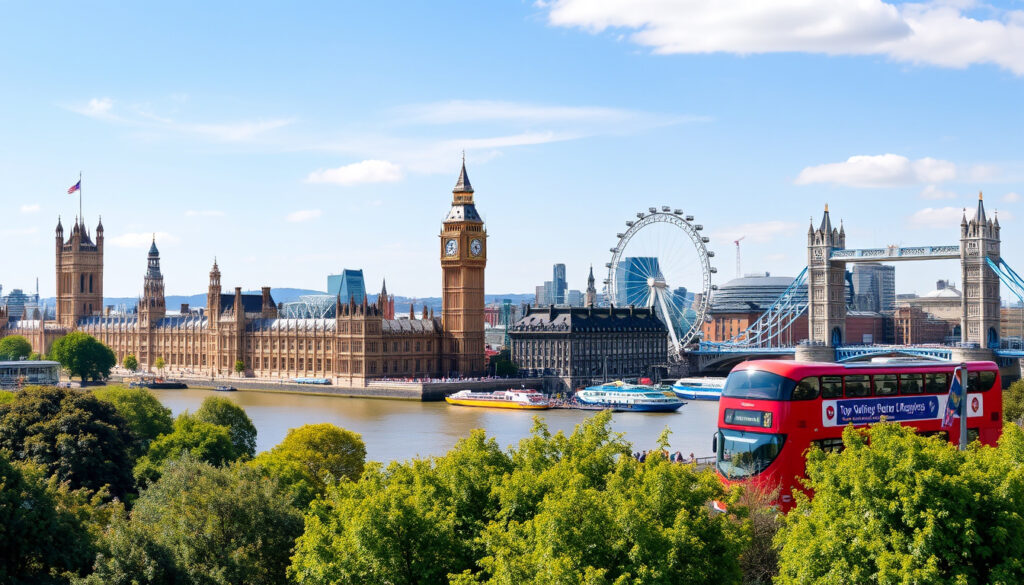
What to Do in London: Top Attractions, Free Places & Budget Tips
Few cities offer the sheer density of world-class attractions, free museums, and diverse neighborhoods that London does. Whether you’re planning a first visit or returning for more, the key to a great trip is knowing where to spend—and where to save. Visit London, the city’s official tourism board, lists 101 free things to do in the city, from world-class museums to riverside walks—and this guide will show you how to see the best of London without breaking the bank.
Free museums in London: 19 major free museums ·
Annual visitors to the British Museum: Over 5.8 million (2019) ·
London Underground stations: 272 stations across 11 lines ·
Average hotel cost per night (central London): £150 – £200
The table below shows key reference data for planning a London trip on a budget.
| Category | Details | Source |
|---|---|---|
| Best time to visit | May–September for weather; December for Christmas markets | Visit London |
| Currency | Pound sterling (£) | — |
| Language | English | — |
| Time zone | GMT (UTC+0) / BST (UTC+1 in summer) | — |
| Emergency number | 999 | — |
Quick snapshot
- Big Ben, Tower Bridge, and Buckingham Palace are free to view from the outside (Rick Steves Europe)
- The British Museum, National Gallery, and Tate Modern offer free entry to permanent collections (Visit London)
- Hyde Park, Regent’s Park, and Hampstead Heath are free to explore (Visit London)
- The London Underground operates daily from around 5:00 am to midnight (Transport for London)
- Tipping is not mandatory but 10–15% is appreciated in restaurants (Visit London)
- Whether £1,000 is enough for a week depends on accommodation type and dining choices (Tripadvisor).
- Exact budget for 3 days varies widely; average daily spend is £100-£200 per person (Visit London).
- Some free attractions require timed tickets—book in advance (Visit London).
- Best time to visit: May–September for weather; December for Christmas markets (Visit London).
- Peak tourist season: June–August (higher prices, longer queues). (Visit London)
- Off-peak: January–February and November (lower hotel rates). (Visit London)
- Rick Steves’ London budget article was published March 2020 (Rick Steves Europe).
- Visit London’s free-things article was updated for 2026 (Visit London).
- Plan your free museum visits: check opening hours and book timed slots (Visit London).
- Secure tickets for free attractions that require advance booking. (Visit London)
- Compare accommodation options in budget-friendly neighborhoods. (Visit London)
- Research discount passes like the London Pass if you plan paid attractions. (Visit London)
What should you not miss in London?
London packs more iconic sights per square mile than almost any city in the world. The trick is knowing which ones deliver real value.
Iconic landmarks: Big Ben, Tower Bridge, Buckingham Palace
Big Ben and the Houses of Parliament are essential photo stops. The clock tower is visible from Parliament Square and across the Thames—no ticket required. Tower Bridge offers free pedestrian access across the walkways; the paid exhibition inside is optional. Buckingham Palace lets you watch the Changing of the Guard ceremony without charge. Rick Steves notes that the pageantry costs nothing and recommends arriving early for a good spot.
World-class museums: British Museum, Natural History Museum
The British Museum houses the Rosetta Stone and the Parthenon Marbles among eight million objects. Entry to the permanent collection is free. Visit London lists the British Museum, National Gallery, and Tate Modern as top free attractions. The Natural History Museum, also free, features dinosaur skeletons and the Hope Diamond.
Cultural experiences: West End shows, Borough Market
West End theatre tickets can be found at reduced prices through same-day booths at Leicester Square. Borough Market is a top food destination, open Monday through Saturday, with free entry and tasting samples. Visit London’s budget guide includes food markets as money-saving stops for travelers.
The implication: London’s heaviest hitters are often free to see or cheap to experience if you know the back way in.
What to do in London in 3 days?
A three-day trip can cover the essentials without rushing—if you group sights geographically and use the tube wisely. Below is a step-by-step plan.
- Day 1: Westminster & South Bank. Start at the London Eye (book online for discounts), walk past Westminster Abbey, cross the Thames via Westminster Bridge, and stroll along the South Bank toward Tate Modern. Visit London recommends riverside strolls as free activities along this route.
- Day 2: Museums & Covent Garden. Spend the morning at the British Museum (free entry), then walk to Covent Garden for street performers and market stalls. In the evening explore Soho for affordable dining. Klook’s budget itinerary includes Covent Garden as a low-cost stop.
- Day 3: Markets & Greenwich. Start at Borough Market for breakfast, visit the Tower of London (pre-book tickets to avoid queues), then take a Thames clipper to Greenwich for the Maritime Museum (free) and the view from the Royal Observatory hill.
The pattern: Three focused days give you the core landmarks plus breathing room for spontaneous finds.
What are 7 places to visit in London for free?
Free attractions are London’s superpower. The city’s public museums, parks, and markets provide world-class experiences at zero cost.
Museums and galleries with free admission
- British Museum – Rosetta Stone, Egyptian mummies, global artifacts. Free permanent collection. Visit London confirms free entry.
- National Gallery – Paintings from Van Gogh to da Vinci. Trafalgar Square location. Free entry.
- Tate Modern – Contemporary art in a former power station. Free permanent collection.
- Natural History Museum – Dinosaur skeletons, volcano simulator, wildlife exhibits. Free admission.
Parks and public spaces
- Hyde Park – 350 acres with Speaker’s Corner (Sundays), Serpentine lake, and free walking paths. Rick Steves identifies Speaker’s Corner as a free spectacle.
- Hampstead Heath – Panoramic city views from Parliament Hill, swimming ponds, and woodland trails. Free entry.
Markets and street art
- Camden Market – Free entry, diverse food stalls, vintage clothing, and street art. Open daily.
- Borough Market – Free entry (Mon–Sat), food sampling, historic market building near the Thames.
What this means: The seven free stops above cover culture, nature, and food—zero admission cost across all of them.
What to avoid in London as a tourist?
Not every famous name is worth your time or money. Knowing which attractions and scams to sidestep protects both your wallet and your schedule.
Overpriced tourist traps
- Madame Tussauds – High ticket price, long queues, and a commercialized wax experience. Rick Steves Travel Forum identifies several attractions as overpriced tourist traps.
- London Dungeon – Expensive and often crowded; reviews cite short duration for the price.
- Expensive airport transfers – Tripadvisor warns that pricey airport transfers are one of London’s common tourist traps. Take the tube or Heathrow Express instead.
Common scams and rip-offs
- Magicians on Westminster Bridge – Tripadvisor warns travelers about magicians who perform then demand payment.
- Third-party Oyster card vendors – Only buy from tube station machines or official TfL outlets. Markups on the street are steep.
- Restaurant service charge – Check the bill; many places add 12.5% automatically. You don’t need to tip extra.
Crowded times and tube peak hours
Ride the tube after 9:30 am to avoid peak fares and crush crowds. Weekend mornings are quietest for popular sights like the British Museum. June through August brings peak tourist season with higher prices and longer queues—January–February and November offer lower hotel rates.
“London’s best experiences often cost nothing—the mistake is paying for the wrong ones.” — Visit London official guide
The catch: Avoiding tourist traps doesn’t mean skipping famous sights. Hit the free icons, skip the overpriced ones, and you’ll see more for less.
What to do in London with kids?
London is one of the most child-friendly cities in Europe, with dozens of free and low-cost activities designed for young visitors.
Kid-friendly museums
- Science Museum – Free entry, interactive exhibits, flight simulators, and the Wonderlab gallery. Visit London includes it among free museums.
- Natural History Museum – Free, with dinosaur skeletons, earthquake simulator, and hands-on science zones.
Outdoor activities
- Hyde Park playground – Diana Memorial Playground features a huge pirate ship and sensory trail. Free entry.
- London Zoo – Located in Regent’s Park, family discounts available if booked online. Not free, but educationally rich.
Interactive experiences
- Harry Potter Studio Tour – Requires a separate day trip to Leavesden and advance booking. Expensive but unforgettable for fans.
- Tate Modern – Free family workshops on weekends; the Turbine Hall installations are always a hit with kids.
The pattern: London’s free museums and parks give families full days of entertainment at zero cost, making it possible to enjoy a week-long trip on a modest budget.
thattravel.co.uk, reddit.com, globalworkandtravel.com, reddit.com, visitlondon.com, reddit.com, facebook.com
Frequently asked questions
What is the best area to stay in London for tourists?
South Bank, Covent Garden, and Bloomsbury offer central locations with good tube access. Budget travelers often choose Paddington or Earl’s Court for lower hotel rates.
Is London expensive for food and drink?
It can be, but street markets like Borough Market, Camden Market, and Brick Lane offer affordable meals. Supermarket meal deals (sandwich, snack, drink) cost around £3–£5. Visit London estimates average daily spend at £100–£200 per person, including food.
Do I need a visa to visit London as a tourist?
Many nationalities (US, Canada, Australia, EU, Japan) can visit for up to 6 months without a visa. Check the UK government website for your country before booking.
How do I get around London on a budget?
Use contactless payment on tube and buses: daily capping means you never overpay. Walking is free and often faster for central destinations. Transport for London runs 272 stations across 11 lines.
Are there any free walking tours in London?
Yes—several companies offer free walking tours (you tip what you feel is fair). Look for “Sandemans Free Tour” or “Free London Walking Tours” covering Westminster, the City, and Harry Potter filming locations.
What should I pack for a trip to London?
Layers: London weather changes quickly. A waterproof jacket, comfortable walking shoes, and a small umbrella are essential year-round. Visit London’s traveler information suggests packing for both sun and rain regardless of season.
Is it safe to walk alone at night in London?
Central London is generally safe, but stick to well-lit streets and avoid quiet side streets after midnight. Public transport runs until around midnight; night buses and some tube lines operate 24 hours on weekends.
“The best way to avoid tourist traps is to walk everywhere you can—you’ll discover the real London between the landmarks.” — Money Saving Expert (Martin Lewis) budget travel advice
More related posts
 Do Sing Sang VND – Live Exchange Rate & Converter
 Park Jin-joo Biography: Age, Husband, Movies & FAQs (2025)
 Wan To Play Forest: Prices, Hours, Activities & Reviews
 International Kindergarten Schools in Singapore: Fees & Top Picks
 Science Tuition for Primary 5: Compare Centre & Syllabu
 Hong Kong Race Results Today – Live Updates & Dividend Payouts
 Lao Wei Dao Sha Guo Bao: Menu, Outlets, Reviews Singapore
 Son Jong-Won Chef Wife: Is He Married? Age & Facts
